
By Steven Gan
Do you remember the knee-jerk call and response at Trump rallies? Trump would yell out several times to his supporters, “Who’s going to pay for the wall?” Raising fists, the crowd would shout with one voice, “Mexico!”
That Trump would bring the Mexican government to its knees and make it pay for his big, bad, beautiful wall was just one of the fantastical promises that propelled him to the presidency.
In view of Trump’s 100 days of failures, reversals, and flip-flops, it doesn’t surprise me in the least that we don’t hear much about Mexico paying for the wall anymore, let alone how this monstrosity is even going to be built. Note that Trump never did explain exactly how we were going to force Mexico to foot the bill. But to Trump’s supporters, these annoying details were beside the point. All they cared about was the anti-immigration sentiment behind creating an impenetrable fortification.
Although it was fun while it lasted, now, as the rubber meets the road, some cold hard facts are coming into focus.
One of these facts, ironically, relates to statements by Interior Secretary Ryan Zinke, who is backing off Trump’s promise to build his version of the Great Wall of China. “You see, the border is complicated,” Zinke said back at the end of March when speaking to the Public Lands Council. He elaborated:
“The Rio Grande, what side of the river are you going to put the wall? We’re not going to put it on our side and cede the river to Mexico. And we’re probably not going to put it in the middle of the river.”
And then there’s the annoying fact that most of the land in Texas that’s along the Rio Grande is privately owned. The folks who own the land are not planning to sell cheaply, and they won’t allow the government to take their property (through eminent domain) without a fight that could take years. A number of these landowners, some of whose families have owned land bordering the river since the 18th century, are vowing to stand firm no matter the legal costs.
And did we mention the cost of the wall itself? Trump claimed at first that he could build the structure, everything said and done, for less than $10 billion. Now it’s estimated at $25 billion. But even if it’s $100 billion, don’t worry, because the Republicans will cancel social programs like Meals on Wheels that feed and support millions of poor Americans in order to pay for it.
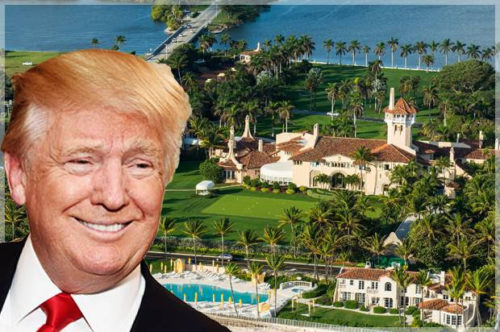
Speaking of high costs to the government, let’s not forget Trump’s weekend jaunts down to the “southern White House” to escape from a week of dealing with all the world’s problems that he bragged only he could fix. As they say, when the going gets tough, the tough go to Mar-a-Lago.
But those of us opposed to any investment in an expensive new border wall can take heart. So far, Trump has reversed course on the importance of NATO, U.S. involvement in Syria, whether China is a currency manipulator, and more, so it’s likely that in time his grandiose border wall, with all of its immense challenges, will become just one more forgotten promise.
 Tenth Dems lead election protection lawyers, including those who drafted the manual and facilitated the training, spent Election Day in law offices made available to serve as election protection headquarters. From there, they supported the team in the field by answering questions and, when appropriate, conveying concerns to the Cook and Lake County Clerks’ offices. The headquarters group also redeployed lawyers to trouble spots as they became aware of the need. An incident log prepared in in election protection headquarters documents how critical these efforts were to the success of Democratic candidates across the 10th District. Just as the experience of the election protection team in 2014 helped leaders target polling places for 2016, the 2016 log will be an important tool for organizing the election protection effort in 2018.
 ourn, to celebrate, and to plan how to move forward.
 In the high-profile congressional race, Democrat Brad Schneider comfortably beat Republican incumbent Bob Dold, 52.5 percent to 47.4 percent. 2016 marked the third time Schneider and Dold faced each other. Schneider’s win this year was the largest margin of victory in any Schneider-Dold race.
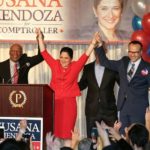 Another race that received a lot of attention was the campaign for Comptroller between Democrat Susana Mendoza and Republican Leslie Munger. Mendoza won the 10th District vote 48.5 percent to Munger’s 46 percent. The spread was slightly larger statewide, as Mendoza received 49.1 percent while Munger totaled 44.8 percent.